

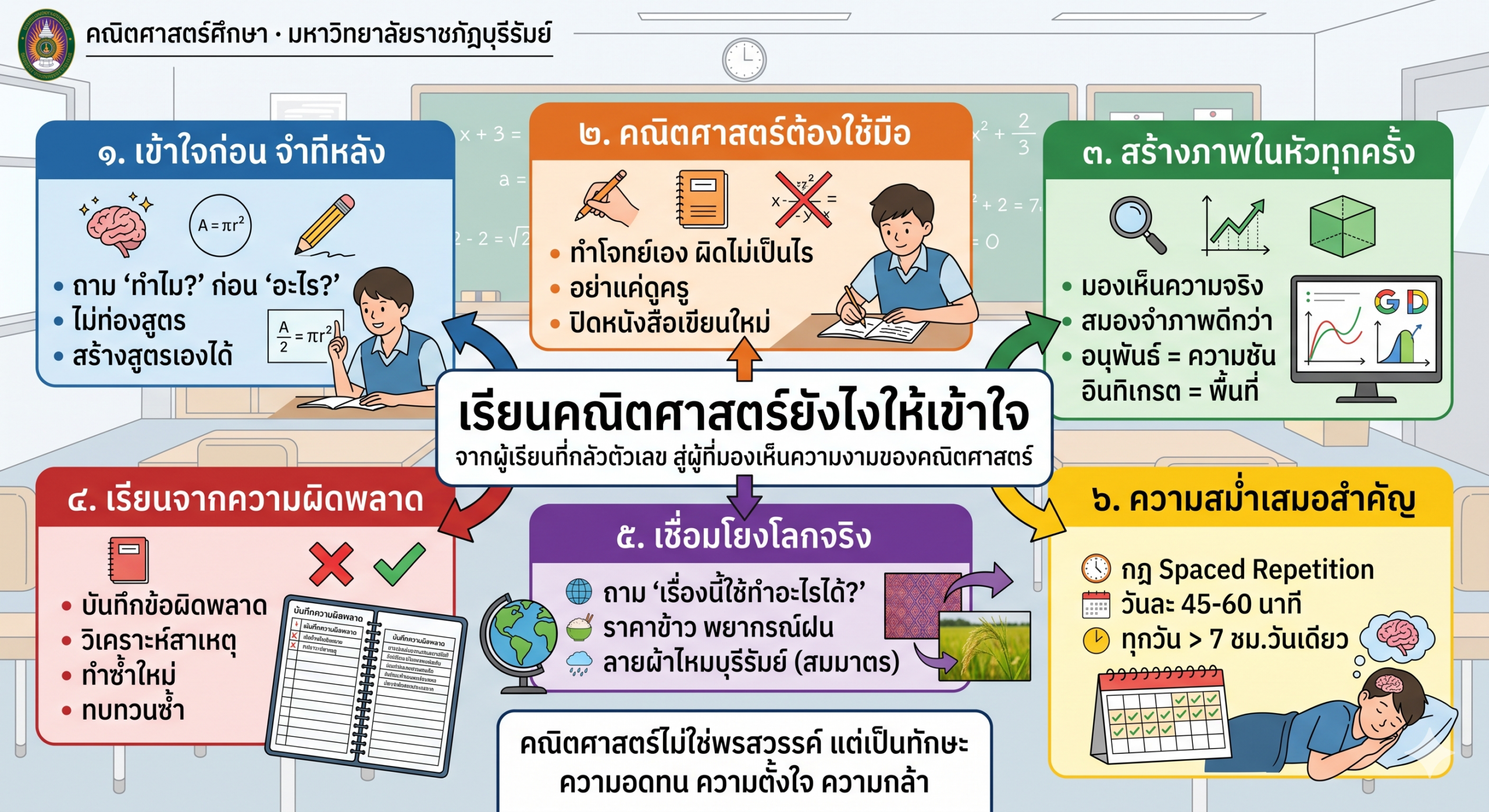
เรียนคณิตศาสตร์ยังไงให้เข้าใจ
จากผู้เรียนที่กลัวตัวเลข สู่ผู้ที่มองเห็นความงามของคณิตศาสตร์
“คณิตศาสตร์ยาก” คือประโยคที่ครูคณิตศาสตร์ทุกคนคุ้นหู แต่ความจริงคือ ไม่มีใครเกิดมาพร้อมกับ ความสามารถหรือความไร้ความสามารถทางคณิตศาสตร์ติดตัว สิ่งที่แตกต่างกันระหว่างคนที่ “เก่งคณิต” กับ “ไม่เก่งคณิต” คือ วิธีการเรียน ไม่ใช่สมอง
หลักการที่ ๐๑
เข้าใจก่อน จำทีหลัง
ปัญหาใหญ่ที่สุดของผู้เรียนคณิตศาสตร์คือการเริ่มต้นด้วยการท่อง สูตร แทนที่จะเป็นการทำความเข้าใจว่า สูตรนั้นมาจากไหน ลองนึกภาพว่าคุณท่องจำสูตรพื้นที่วงกลมA = πr²โดยไม่รู้เลยว่า เหตุใด π ถึงปรากฏอยู่ที่นั่น และทำไมต้องยกกำลังสอง เมื่อข้อสอบเปลี่ยนบริบทเพียงเล็กน้อย คุณก็จะหลงทางทันที
วิธีที่ถูกต้องคือการถามตัวเองเสมอว่า“ทำไม?”ก่อนที่จะถาม“อะไร?”ทำไมเส้นตรงสองเส้นที่ตั้งฉากกันจึงมีความชันคูณกันได้ −1? ทำไมลอการิทึมถึงเป็น ฟังก์ชันผกผันของเลขยกกำลัง? เมื่อคุณเข้าใจ “ทำไม” คุณไม่จำเป็นต้องจำสูตรอีกต่อไป เพราะคุณสามารถสร้างมันขึ้นมาเองได้ใหม่ทุกครั้งที่ต้องการ
หลักการที่ ๐๒
คณิตศาสตร์ต้องใช้มือ ไม่ใช่แค่ตา
การอ่านหนังสือคณิตศาสตร์แตกต่างจากการอ่านนิยายโดยสิ้นเชิง เวลาคุณนั่งดูครูแก้โจทย์บนกระดาน ทุกอย่างดูง่าย ดูสมเหตุสมผล และดูชัดเจน แต่พอถึงเวลาที่คุณต้องลงมือเองคนเดียว ความรู้สึกนั้นกลับหายไปในพริบตา นั่นเป็นเพราะสมองของคุณกำลังสับสนระหว่าง “ความเข้าใจ” กับ “ความคุ้นเคย”
นั่งอ่านตัวอย่างโจทย์ 20 ข้อ แล้วคิดว่าตัวเองพร้อมทำข้อสอบแล้ว
ทำโจทย์ 5 ข้อด้วยตัวเอง ผิดก็ไม่เป็นไร แล้วค้นหาสาเหตุที่ผิด
กฎสำคัญคือ ทุกครั้งที่อ่านบทพิสูจน์หรือตัวอย่าง ให้ปิดหนังสือแล้วลองเขียนใหม่ด้วยตัวเอง ถ้าทำได้ แปลว่าคุณเข้าใจจริง ถ้าทำไม่ได้ แปลว่าคุณแค่จำ ซึ่งความแตกต่างนี้ มีความสำคัญอย่างยิ่งในระยะยาว
หลักการที่ ๐๓
สร้างภาพในหัวทุกครั้งที่ทำได้
สมองมนุษย์ถูกออกแบบมาให้จดจำภาพได้ดีกว่าตัวเลขและสัญลักษณ์นามธรรม คณิตศาสตร์ที่ดีที่สุดจึงเกิดขึ้นเมื่อเราสามารถ “มองเห็น” ความจริงก่อนที่จะ “คำนวณ” มัน
ตัวอย่างเช่น เมื่อเรียนเรื่องอนุพันธ์ ให้คิดถึงมันในฐานะ “ความชันของเส้นโค้ง ณ จุดนั้น” แทนที่จะมองว่ามันเป็นแค่สูตร lim ที่ยุ่งยาก เมื่อเรียนเรื่องการอินทิเกรต ให้นึกภาพ การนับพื้นที่ใต้กราฟ ไม่ใช่แค่กระบวนการย้อนกลับของการหาอนุพันธ์ ความเข้าใจเชิงภาพนี้เองที่จะทำให้คุณตรวจสอบคำตอบของตัวเองได้โดยสัญชาตญาณ
โปรแกรมอย่าง GeoGebra หรือ Desmos ช่วยให้คุณมองเห็นพฤติกรรมของฟังก์ชัน กราฟ และรูปทรงเรขาคณิตได้อย่างโต้ตอบ แทนที่จะจินตนาการในหัวอย่างเดียว ลองลากพารามิเตอร์ แล้วดูว่ากราฟเปลี่ยนไปอย่างไร ความเข้าใจจะเกิดขึ้นเองโดยอัตโนมัติ
หลักการที่ ๐๔
เรียนจากความผิดพลาดอย่างเป็นระบบ
ผู้เรียนคณิตศาสตร์ที่ดีที่สุดไม่ใช่คนที่ไม่เคยทำโจทย์ผิด แต่เป็นคนที่ทำโจทย์ผิดแล้ว ใช้เวลาศึกษาความผิดพลาดนั้นอย่างจริงจัง หลายคนตรวจข้อสอบได้คะแนน แล้วโยนทิ้ง โดยไม่ดูว่าตัวเองผิดตรงไหน นั่นคือการสูญเสียโอกาสทองที่สุดในการเรียนรู้
มีสมุดเฉพาะสำหรับจดโจทย์ที่ทำผิด พร้อมสาเหตุที่ผิดและวิธีแก้ไขที่ถูกต้อง
ดูว่าความผิดพลาดของคุณมีรูปแบบซ้ำกันหรือไม่ เช่น ลืมตรวจสอบโดเมน หรือเครื่องหมายลบในการแทนค่า
หลังจากเข้าใจสาเหตุแล้ว ปิดหนังสือแล้วลองทำโจทย์ข้อนั้นใหม่ตั้งแต่ต้น โดยไม่ดูเฉลย
กลับไปทำโจทย์ที่เคยผิดอีกครั้งหลังผ่านไป 1–2 สัปดาห์ เพื่อตรวจสอบว่าความเข้าใจยังอยู่
หลักการที่ ๐๕
เชื่อมโยงคณิตศาสตร์กับโลกจริง
คณิตศาสตร์ที่ดีที่สุดไม่ได้อยู่แค่บนกระดาษ แต่อยู่รอบตัวเราทุกวัน ราคาข้าวที่ผันผวนในตลาด รูปแบบลายผ้าไหมพื้นเมืองบุรีรัมย์ที่เต็มไปด้วยความสมมาตร การพยากรณ์ปริมาณน้ำฝนเพื่อวางแผน การเกษตร สิ่งเหล่านี้ล้วนมีคณิตศาสตร์ซ่อนอยู่
เมื่อคุณเรียนเรื่องใดก็ตาม ลองถามตัวเองว่า“เรื่องนี้ใช้ทำอะไรได้จริงในชีวิต?”ถ้าตอบได้ แปลว่าคุณเข้าใจ ถ้าตอบไม่ได้ อาจหมายความว่าคุณยังเรียนแค่ผิวเผิน การเชื่อมโยงกับบริบทจริงไม่ใช่แค่ทำให้คณิตศาสตร์น่าสนใจขึ้น แต่ยังช่วยให้สมองจดจำ และประมวลผลข้อมูลได้ดีกว่าการเรียนแบบนามธรรมล้วน ๆ
หลักการที่ ๐๖
ความสม่ำเสมอสำคัญกว่าความเข้มข้น
หลายคนพยายามอ่านหนังสือคณิตศาสตร์ครั้งละ 6 ชั่วโมงก่อนสอบ แต่ลืมไปหมดภายในสัปดาห์เดียว งานวิจัยด้านประสาทวิทยาศาสตร์ชี้ให้เห็นอย่างชัดเจนว่า สมองสร้างและเชื่อมโยงความรู้ใหม่ ได้ดีกว่าเมื่อได้รับข้อมูลอย่างสม่ำเสมอและมีช่วงพัก เรียกว่าหลักการSpaced Repetition
เรียนคณิตศาสตร์วันละ45–60 นาทีทุกวัน ดีกว่าเรียน 7 ชั่วโมงในวันเดียว แล้วหยุด 3 วัน การแบ่งเป็นช่วงสั้น ๆ สม่ำเสมอทำให้สมองมีเวลาจัดระเบียบความรู้ ระหว่างการนอนหลับ ซึ่งเป็นกระบวนการที่ขาดไม่ได้
บทสรุป
คณิตศาสตร์ไม่ใช่พรสวรรค์ แต่เป็นทักษะ
สิ่งที่น่าตื่นเต้นที่สุดเกี่ยวกับคณิตศาสตร์คือมันเป็นระบบที่สมบูรณ์ในตัวเอง ทุกสูตร ทุกทฤษฎีบท ทุกวิธีแก้ปัญหา ล้วนสร้างขึ้นจากหลักการพื้นฐานเพียงไม่กี่ข้อ คนที่ “เก่งคณิต” ที่แท้จริงไม่ใช่คนที่จำสูตรได้มากที่สุด แต่คือคนที่เข้าใจลึกพอ ที่จะสร้างหนทางแก้ปัญหาใหม่ ๆ ได้เองเมื่อเผชิญสถานการณ์ที่ไม่เคยพบ
ทุกคนมีศักยภาพในการเข้าใจคณิตศาสตร์ในระดับนั้น สิ่งที่ต้องการคือ ความอดทน ความตั้งใจที่จะเข้าใจแทนการท่อง และความกล้าที่จะนั่งทนกับความสับสน โดยรู้ว่าความสับสนนั้นคือขั้นตอนปกติ และจำเป็นของการเรียนรู้
คณิตศาสตร์ไม่ได้สอนเราแค่การคำนวณ แต่สอนเราให้คิดอย่างมีเหตุมีผล และนั่นคือทักษะที่ติดตัวไปตลอดชีวิต
Learning Mathematics with Understanding
From a Number-Phobic Learner to Beholding the Beauty of Mathematics
Mathematics Education · Buriram Rajabhat University
“Math is hard” is a phrase familiar to every mathematics teacher. However, the truth is that no one is born with an innate mathematical “ability” or “disability.” The fundamental difference between those who are “good at math” and those who “struggle” lies in their learning methodology, not their brain capacity.
Principle 01: Understanding Precedes Memorization
The greatest pitfall for mathematics learners is beginning with formulaic memorization rather than conceptual understanding. Imagine memorizing the area of a circle formula, $A = \pi r^2$, without knowing why $\pi$ is there or why the radius must be squared. When an exam shifts the context even slightly, you will immediately find yourself lost.
The correct approach is to always ask “Why?” before asking “What?” Why do the slopes of two perpendicular lines multiply to $-1$? Why is a logarithm the inverse function of an exponent? When you understand the “why,” you no longer need to rely on rote memory because you can reconstruct the logic yourself whenever needed.
A single chapter understood deeply is more valuable than a thousand formulas memorized blindly.
Principle 02: Mathematics Requires Hands, Not Just Eyes
Reading a mathematics textbook is fundamentally different from reading a novel. When watching a teacher solve a problem on the board, everything appears logical and clear. However, the moment you try it yourself, that clarity often vanishes. This happens because the brain confuses “familiarity” with “understanding.”
-
The Wrong Way: Reading through 20 examples and assuming you are ready for the exam.
-
The Right Way: Solving 5 problems entirely on your own. It is okay to fail; the goal is to identify the cause of the error.
The Golden Rule: Every time you read a proof or an example, close the book and attempt to rewrite it from scratch. If you can do it, you truly understand. If not, you were merely memorizing. This distinction is critical for long-term retention.
Principle 03: Visualize Whenever Possible
The human brain is biologically wired to remember images better than abstract numbers and symbols. The most profound mathematical insights occur when we can “see” the truth before we “calculate” it.
For instance, when learning derivatives, think of them as the “instantaneous slope of a curve” rather than just a complex limit formula. When studying integration, visualize the accumulation of “area under a curve” rather than just the reverse process of differentiation. This visual intuition allows you to verify your answers instinctively.
💡 Pro-Tip: Utilize Technology
Software like GeoGebra or Desmos allows you to interact with functions, graphs, and geometric shapes. Instead of just imagining it, manipulate the parameters and observe how the graph responds. Understanding will often follow automatically.
Principle 04: Systematic Learning from Mistakes
The best mathematics students are not those who never make mistakes, but those who study their mistakes rigorously. Many students check their scores and discard the paper without analyzing their errors. This is a missed “golden opportunity” for growth.
-
Error Journaling: Keep a specific notebook for problems you got wrong, noting the cause of the error and the correct solution.
-
Pattern Analysis: Identify recurring patterns. Do you often forget to check the domain? Do you struggle with sign changes during substitution?
-
The “Blank Page” Retrial: Once you understand the mistake, close the solution and resolve the problem from start to finish.
-
The 2-Week Review: Revisit the same problem after 1–2 weeks to ensure the conceptual understanding has stuck.
Principle 05: Bridging Mathematics to the Real World
The most meaningful mathematics does not exist solely on paper; it is woven into our daily lives. The fluctuating price of rice in the market, the intricate symmetry of traditional Buriram silk patterns, or rainfall forecasting for agricultural planning—these all harbor hidden mathematical structures.
When studying a topic, ask yourself: “How can this be applied in real life?” If you can answer this, you have truly grasped the concept. If not, your learning may still be superficial. Connecting math to a real-world context not only makes it more engaging but also helps the brain process and store information more effectively than through pure abstraction.
Principle 06: Consistency Outweighs Intensity
Many students attempt “marathon” study sessions of 6 hours right before an exam, only to forget everything within a week. Neuroscience shows that the brain builds and strengthens neural connections more effectively through Spaced Repetition.
📐 The Effective Learning Formula:
Studying mathematics for 45–60 minutes daily is significantly more effective than studying for 7 hours in a single day followed by a 3-day break. Short, consistent bursts give the brain time to organize knowledge during sleep—a process that is non-negotiable for deep learning.
Conclusion: Mathematics is a Skill, Not a Talent
The most exciting aspect of mathematics is that it is a self-consistent system. Every formula, theorem, and solution is built upon a few fundamental principles. A “math expert” is not someone who remembers the most formulas, but someone who understands the foundations deeply enough to forge new paths when facing unfamiliar problems.
Everyone has the potential to reach that level. It requires patience, an intention to understand rather than memorize, and the courage to sit with confusion—knowing that confusion is a normal and necessary stage of learning.
Mathematics does not just teach us how to calculate; it teaches us how to think logically. And that is a skill that will stay with you for a lifetime.
Mathematics Education · Buriram Rajabhat University